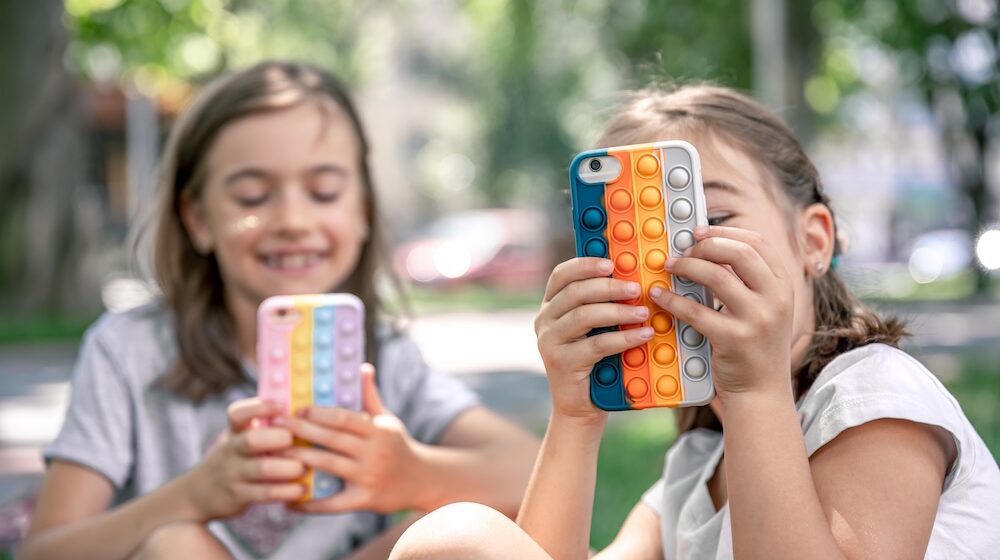
Children who spend more than three hours a day on social media are significantly more likely to develop depression and anxiety in their early teenage years, according to new research — with disrupted sleep identified as the primary mechanism driving the harm.
The findings come from the SCAMP study, a long-running longitudinal project led by public health researchers at Imperial College London tracking more than 2,300 schoolchildren across the capital. Researchers found that children aged 11-12 who were heavy social media users were more likely to show clinically significant symptoms of both conditions by the time they reached 13-15, with girls showing a stronger association with depression than boys.
Crucially, the study suggests the damage is not being done by social media directly, but by what heavy use displaces — chiefly sleep. Children using platforms heavily, particularly late into the evening, were getting less rest, and it is this sustained sleep disruption that researchers believe is responsible for the downstream mental health effects.
“It’s not as straightforward as saying that social media use directly causes poor mental health in children,” said Dr Chen Shen, first author of the study. “But we see that children who use social media above a certain level at age 11 or 12 are more likely to develop mental health problems two or three years later, and we believe this is largely due to sustained disruptions to sleep.”
The research tracked pupils from 31 London schools between 2014 and 2018, comparing those with limited daily use of up to 30 minutes against those exceeding three hours. The longitudinal design allowed researchers to account for participants’ mental health at baseline, ruling out the possibility that children who were already anxious or withdrawn were simply more likely to reach for their phones.
The authors are careful to note that the data predates the widespread adoption of short-form video and significant changes to how children consume content online, and say updated research reflecting the current digital landscape is needed.
The findings land in the middle of a heated policy debate. Australia has moved to ban social media for under-16s, and France, Spain and Greece are pursuing their own restrictions. In the UK, the government launched a consultation on age restrictions earlier this month. But Professor Mireille Toledano, principal investigator of SCAMP, urged caution about sweeping bans, saying the evidence does not yet support the claim that social media use is inherently harmful.
“Despite calls for an outright ban for under-16s, the evidence that this will solve all the issues children are facing just isn’t there,” she said. “The best outcome may be better regulation of content and working with children and parents to educate them about healthier use.”
The team is now running a school-based intervention trial testing an education programme called Scroll Smart, which aims to teach children how to manage their usage and prioritise sleep. Results are expected later this year.
The study is published in BMC Medicine.